
Paris 2024 marked a turning point: breaking’s official arrival on the Olympic stage gave this hip-hop culture a global platform.
Born in the Bronx in the 1970s, breaking combines dance, acrobatics and artistic expression. In Paris, that blend was presented as a sporting discipline, with a battle format designed to captivate the audience.
This addition reflected the IOC’s strategy to refresh the image of the Olympic Games and attract new audiences through urban sports.
To learn more about its history and path to Olympic recognition, read about breaking at the Paris 2024 Games and consult the official breaking programme.
Legacy: although breaking is absent from the Los Angeles 2028 programme, the media and cultural impact of Paris 2024 raises questions about the place of this art in French sport and education.
Paris 2024: a historic turning point for breaking at Place de la Concorde
Place de la Concorde became an urban arena on August 9 and 10, 2024. This landmark venue hosted a new format: 16 B-Boys and 16 B-Girls, with qualifying rounds, knockout brackets and finals spread over two days.
Format and schedule: each dancer competed in individual, head-to-head battles. Qualification through the Olympic Qualifier Series events in Shanghai and Budapest rewarded originality and skill. Knockout battles then led to the podiums and the crowning of breaking’s first Olympic champions.
Judging criteria
A panel of experts assessed technique, creativity, musicality, execution and interaction with the opponent and audience. These criteria brought the sporting and artistic dimensions together and shaped each dancer’s style.
Music and improvisation
“The DJ drives the battle: they shape the breaks and demand improvisation.”
The DJ played a central role, choosing the breaks, mixing live and adjusting the tempo to make athletes respond in real time.
The French breaking scene
France fielded highly anticipated names, including Dany Dann and Sya Dembélé. Their presence increased national interest and gave spectators and viewers compelling athletes to follow.
For a broader look at the additions to the programme, read about new sports at the 2024 Olympics.
Hip-hop and breakdancing at the Olympic Games: defining moments and audience response
The finals at Place de la Concorde delivered intense moments of performance and emotion.
Silver medal for Dany Dann — On August 10, 2024, Dany Dann won silver. His medal was a source of pride for France. It gave this emerging discipline a global platform and unprecedented visibility.
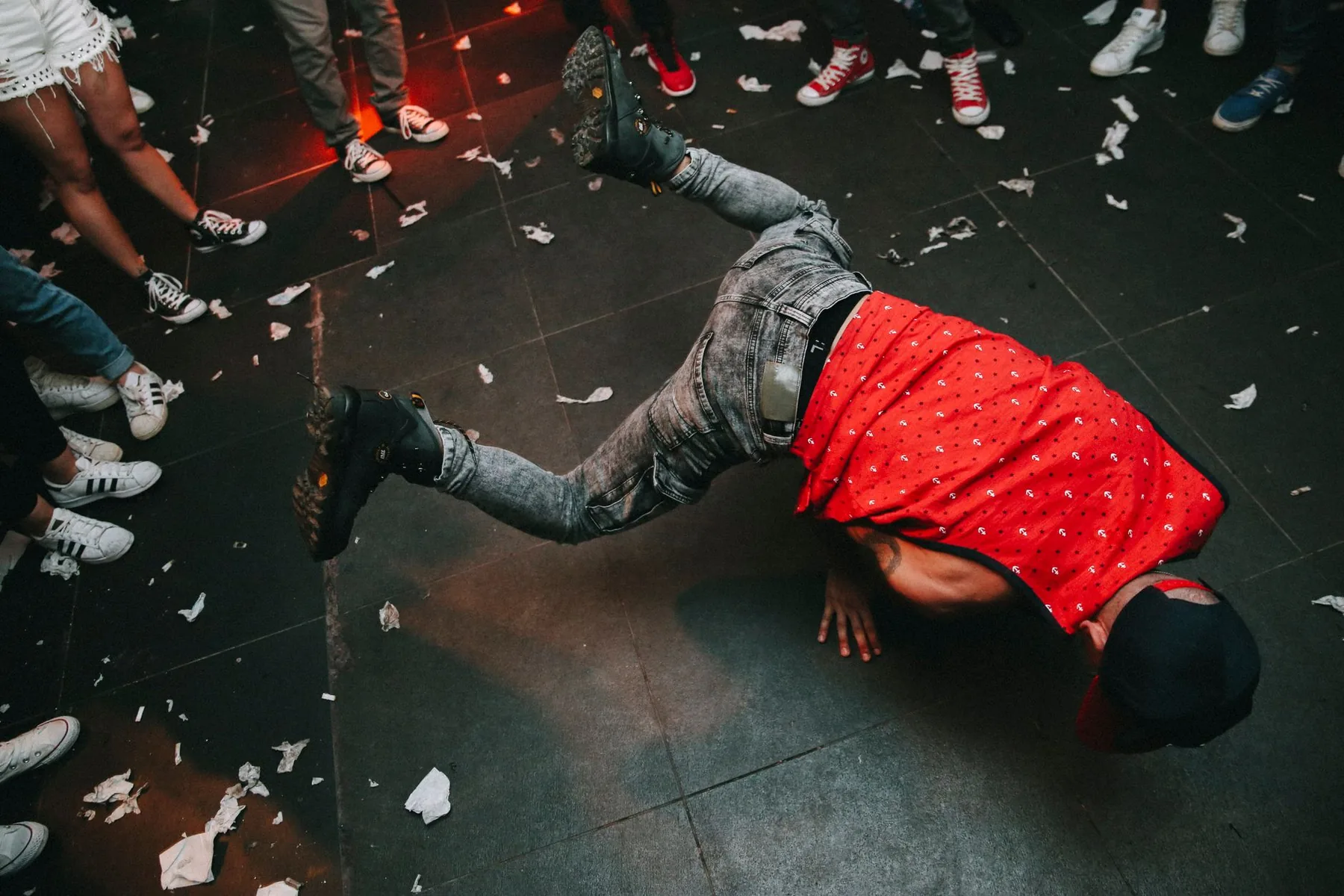
In the spotlight and in the eyes of the audience
The battle format fascinated audiences. Many applauded the competitors’ skill and style.
At the same time, questions arose about the judging criteria and the jury’s role. With little explanation during the broadcasts, some viewers were left puzzled.
Controversy surrounding Raygun
Raygun’s performance and her “kangaroo move” prompted a wave of online reactions.
“Originality must remain at the heart of the discipline.”
Dany Dann publicly defended artistic freedom, reminding audiences that breaking is built on boldness and invention.
A need for clearer explanations
To reach a broad audience, organisers need to explain the rules, scoring and the jury’s role.
Music, improvisation and points should be explained in advance so that each battle is easier to follow.
For a local perspective and footage of the atmosphere, watch this video about the French breaking scene.
Between excitement and uncertainty: the impact in France and the future after Paris
The impact of the Olympic Games boosted participation at the grassroots level, but the overall picture is mixed.
In Aulnay-sous-Bois, the VNR association saw its membership rise from about 530 to 600 and doubled its number of instructors during the autumn school break. Workshops are often full, and local demand is soaring.
Nationally, the federation recorded about 3,000 registered members in 2024, a slight decline. Federation registrations often come late in the season, masking the growth in informal participation.
Governance and prospects
There is vigorous debate about how to organise the discipline. A proposed state diploma for hip-hop teachers aims to professionalise instructors.
Breaking’s absence from the Los Angeles 2028 programme weakens its visibility. The FFD hopes it will return at Brisbane 2032; a decision is expected within two years.
“We need to strengthen clubs, training and the network of local organisations if breaking is to last.”
Useful links: read an assessment of breaking and explore the IOC’s Olympic Agenda 2020 and 2020+5.
Conclusion
This Olympic debut put the urban dance scene in the international spotlight. Paris 2024 brought unprecedented visibility, affirming both artistic expression and sporting performance.
The challenges are clear: explain the rules better, strengthen clubs and support participants to sustain this momentum. Breaking’s absence from the Los Angeles 2028 programme is a reminder that this work continues beyond the Olympic calendar.
The music, the venue and the format of the spectacle made a lasting impression. To understand the qualification pathway and competition format, read this overview of qualification and format.
In conclusion, federations, associations, dancers and audiences must work together to share knowledge, innovate and make this legacy last.